
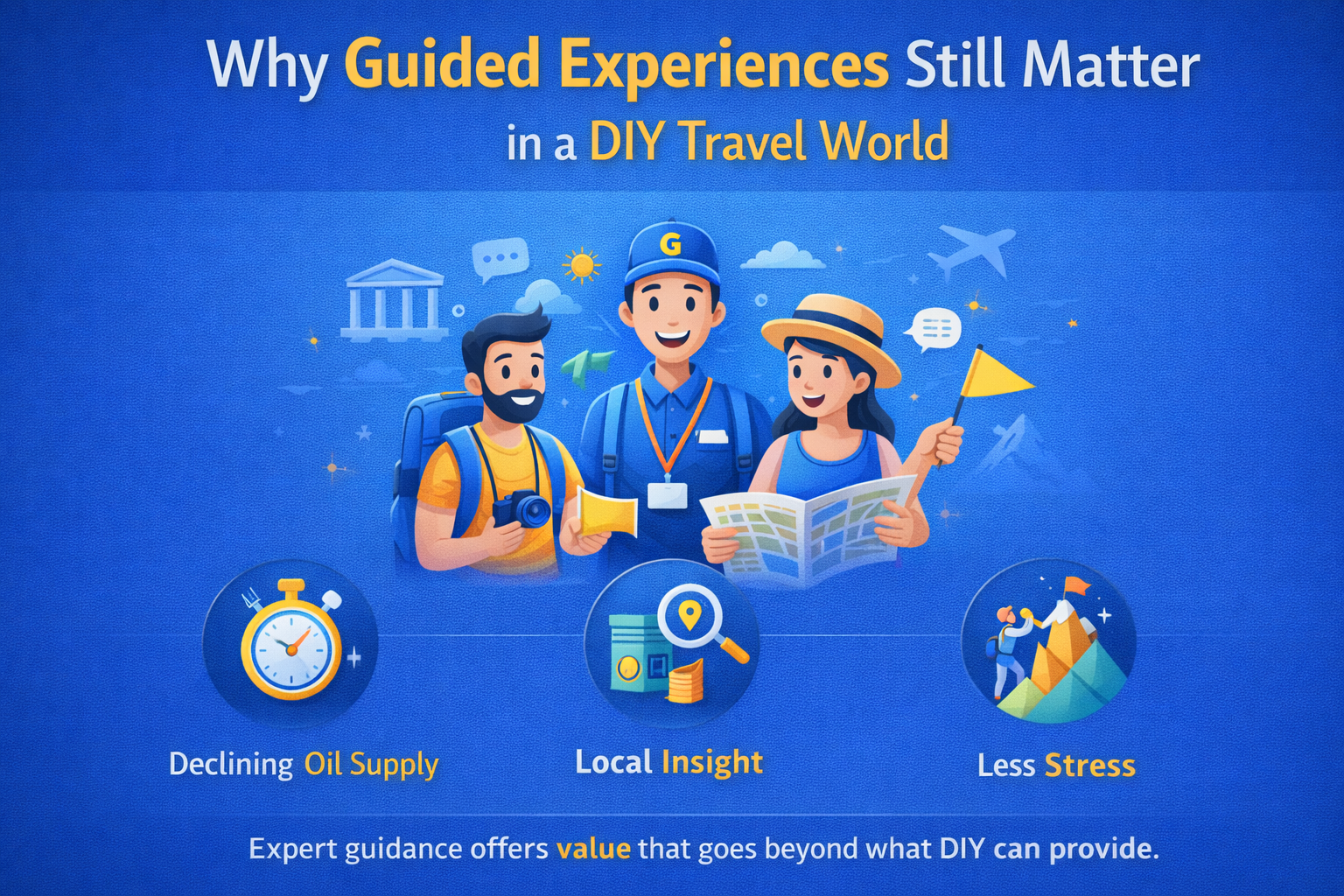
Travel has changed.
Flights are easier to book. Hotels are searchable in seconds. Maps guide you turn by turn. With enough research, you can plan almost any trip yourself.
So where do tours fit into modern travel?
Are they outdated? Too structured? Too touristy?
Not necessarily.
In fact, tours have evolved. And for many travelers, they offer something independent travel can’t always deliver: depth, ease, and connection.
Let’s break down why tours still matter, the different types available, and how to choose the right one.
What Is a Tour, Really?
A tour is more than just being led around with a guide and a flag.
At its core, a tour is a structured travel experience designed to help you explore a destination with expert insight and logistical support.
That can mean:
- A 2-hour walking tour of a historic city
- A multi-day safari
- A food tasting experience
- A cultural immersion trip
- A fully planned international vacation
The format varies. The purpose is the same: to help you experience more with less stress.
Why Tours Are Still Popular
Even in the age of YouTube travel guides and Google reviews, tours remain popular for good reasons.
1. You Learn More
You can visit a historic building alone.
But without context, you might miss its real significance.
A knowledgeable guide adds stories, background, and details you wouldn’t easily find online.
That depth transforms sightseeing into understanding.
2. You Save Time
Planning takes energy.
Researching routes, transportation, entry tickets, and timing can take hours.
A good tour removes that burden.
Everything is organized. You show up and experience it.
For short trips especially, time saved is valuable.
3. Access to Hidden Spots
Local guides often know places you won’t find in top 10 lists.
That might be:
- A family-owned restaurant
- A scenic viewpoint tourists miss
- A cultural tradition outsiders rarely see
Tours can provide insider access.
4. Safety and Comfort
In unfamiliar destinations, safety can be a concern.
Tours offer:
- Local expertise
- Structured schedules
- Group support
This is especially helpful in remote areas, adventure travel, or countries with language barriers.
Types of Tours
Not all tours are the same. Understanding the differences helps you choose wisely.
1. Walking Tours
Short, focused experiences usually lasting 1–3 hours.
Common themes include:
- Historical city tours
- Street art tours
- Food tours
- Ghost tours
They’re affordable and ideal for first-time visitors.
2. Day Tours
These usually include transportation and multiple stops.
Examples:
- Countryside excursions
- Island hopping
- Wine region visits
- Cultural landmarks outside the city
Day tours help you explore beyond city centers without organizing logistics yourself.
3. Multi-Day Guided Tours
These are full travel packages.
They may include:
- Accommodation
- Transport
- Meals
- Entry tickets
- Professional guides
They’re ideal for travelers who prefer structure and convenience.
4. Adventure Tours
Focused on activities like:
- Hiking
- Safari
- Diving
- Skiing
- Cycling
These tours prioritize experience and often require professional guidance for safety.
5. Private Tours
More personalized and flexible.
You have:
- Your own guide
- Adjustable schedule
- Customized stops
They cost more but offer greater control.
Tours vs. Independent Travel
Some travelers prefer full independence.
Others enjoy guided structure.
Here’s a quick comparison.
Independent Travel:
- Flexible schedule
- Complete freedom
- Often cheaper
- Requires planning
Tours:
- Structured schedule
- Less stress
- Deeper insight
- Social interaction
There’s no correct answer.
Many experienced travelers mix both approaches.
For example:
- Explore a city independently
- Book a guided food tour
- Join a day trip to nearby attractions
That balance works well.
The Social Side of Tours
One overlooked benefit of tours is connection.
Traveling solo? Tours help you meet people.
Even short walking tours create conversation.
Multi-day group trips often build lasting friendships.
Shared experiences create quick bonds.
If you’re traveling alone, tours reduce isolation.
How to Choose the Right Tour
Not all tours are equal.
Here’s what to consider before booking.
1. Group Size
Smaller groups usually mean:
- More interaction
- Easier movement
- Better access
Large groups can feel rushed.
2. Reviews
Look beyond star ratings.
Read detailed reviews about:
- Guide knowledge
- Organization
- Pacing
- Value for money
Specific feedback tells you more than generic praise.
3. Itinerary Balance
Check how much time is spent:
- Traveling
- Waiting
- Exploring
Some tours pack too much into one day. Others move too slowly.
Choose based on your energy level.
4. Hidden Costs
Confirm what’s included:
- Meals
- Entry tickets
- Transportation
- Tips
Clear pricing prevents frustration later.
Are Tours Worth the Cost?
Tours can seem expensive compared to self-guided travel.
But consider what you’re paying for:
- Time saved
- Local expertise
- Convenience
- Reduced stress
- Organized logistics
For many people, that’s worth it.
Especially when traveling to unfamiliar destinations.
The Future of Tours
Tours are evolving.
Modern travelers want:
- Smaller groups
- Sustainable practices
- Local authenticity
- Flexible booking
- Digital ticketing
Technology is improving the booking experience, while travelers demand deeper cultural engagement.
The future of tours is not mass tourism.
It’s meaningful experience.
Final Thoughts
Tours are not outdated.
They are tools.
The right tour can:
- Deepen understanding
- Save time
- Reduce stress
- Create connection
- Unlock hidden experiences
The wrong tour can feel rushed and impersonal.
The key is choosing carefully.
Travel isn’t just about where you go.
It’s about how you experience it.
And sometimes, having a knowledgeable guide makes all the difference.

