
Travel today is easier than ever. You can book flights in minutes, reserve hotels instantly, and map out entire cities from your phone.
So why are tours still thriving?
Because convenience is only part of travel. The real goal is experience. And the right tour can turn a simple trip into something memorable, educational, and surprisingly stress-free.
Whether you’re planning a weekend getaway or a two-week adventure abroad, understanding how tours work can help you travel smarter.
Let’s explore what tours really offer, the different types available, and how to decide what fits your travel style.
What Is a Tour?
A tour is an organized travel experience guided by a professional or local expert. It can last a few hours or several days. Some tours focus on history, others on food, adventure, culture, or nature.
At its best, a tour provides three things:
- Structure
- Insight
- Convenience
Instead of figuring everything out yourself, someone else handles logistics while you focus on enjoying the destination.
Why Tours Still Matter
Many travelers assume tours are only for large groups or first-time visitors. That’s not true anymore.
Modern tours are often smaller, more personalized, and more experience-focused.
Here’s why people still choose them.
1. Local Knowledge You Can’t Google
You can read about a city’s history online.
But hearing stories from someone who grew up there is different.
Local guides share:
- Cultural context
- Personal insights
- Hidden spots
- Practical tips
That perspective adds depth to your visit.
2. Time Efficiency
Travel time is limited.
If you’re in a city for two days, spending half of it figuring out transport routes and ticket lines wastes valuable hours.
A tour compresses research and planning into a smooth experience.
You see more in less time.
3. Access to Unique Experiences
Some tours offer access you might not get alone:
- Private tastings
- Behind-the-scenes visits
- Restricted historical areas
- Guided hikes in protected zones
These experiences often require local connections.
4. Reduced Stress
Navigating unfamiliar places can be exhausting.
Language barriers, transport systems, ticket bookings, and safety concerns add pressure.
Tours reduce decision fatigue.
You simply show up.
Types of Tours
Not all tours are structured the same way. Here’s a breakdown of common formats.
Walking Tours
Usually 1–3 hours long.
Perfect for:
- Exploring city centers
- Learning local history
- Discovering food spots
- Themed experiences like art or architecture
They’re affordable and great for orientation on your first day.
Day Trips
These take you outside the main city.
Examples include:
- Mountain excursions
- Coastal visits
- Historic towns
- National parks
Transportation is usually included, which simplifies planning.
Multi-Day Group Tours
These are structured travel packages that include:
- Accommodation
- Transportation
- Meals
- Guided experiences
Ideal for travelers who want everything organized from start to finish.
They’re especially popular for international trips.
Adventure Tours
Focused on physical activity.
Examples:
- Hiking expeditions
- Safari trips
- Diving tours
- Cycling journeys
These often require expert guides for safety and skill.
Private Tours
Customized experiences for individuals, couples, or small groups.
Advantages:
- Flexible schedule
- Personalized attention
- Adjusted pacing
They cost more but offer greater control.
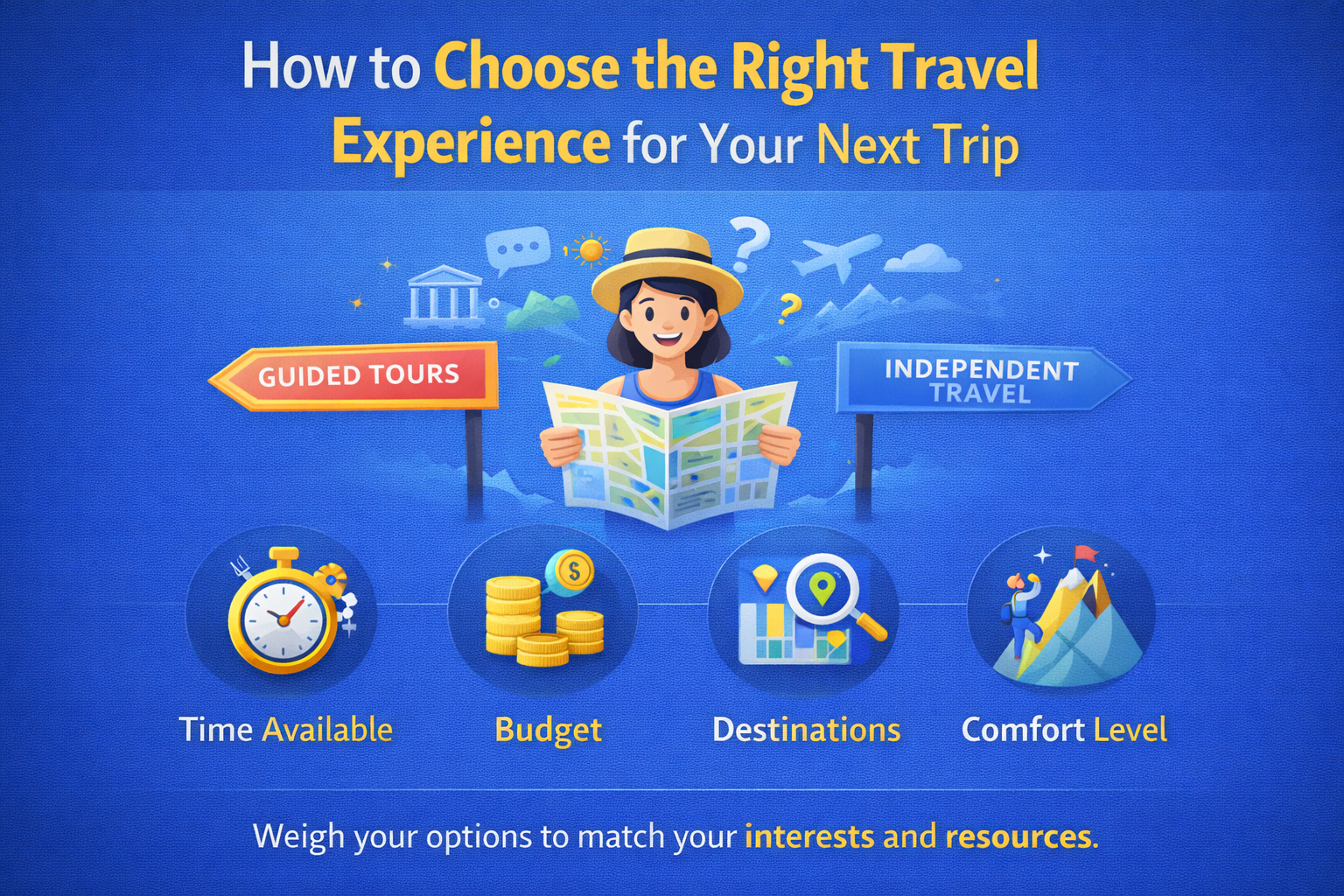
Group Tours vs. Independent Travel
Many travelers debate this question.
Should you explore alone or join a tour?
Independent travel offers freedom. You set your schedule, adjust plans easily, and often spend less.
Tours offer efficiency and insight. You benefit from local expertise and reduced stress.
A balanced approach works well.
For example:
- Explore neighborhoods independently
- Book a guided food tour
- Join a day trip to nearby attractions
This combination gives you both flexibility and structure.
The Social Benefit of Tours
Traveling solo? Tours are one of the easiest ways to meet people.
Even short walking tours create natural conversation.
Multi-day group tours often build strong connections because participants share meals, transport, and experiences.
If you’re open to meeting new people, tours make it easy.
How to Choose the Right Tour
Not every tour is worth your time or money.
Before booking, consider these factors.
1. Group Size
Smaller groups usually mean:
- Better interaction
- Less waiting
- More personalized experience
Large groups can feel rushed.
2. Reviews and Guide Quality
The guide often determines the quality of the tour.
Look for comments about:
- Knowledge
- Energy
- Communication
- Organization
A great guide transforms an average itinerary into a great experience.
3. Pace
Some tours move quickly, covering many sites in one day.
Others move slowly, focusing on fewer locations in more depth.
Choose based on your energy level and travel goals.
4. What’s Included
Check whether the price covers:
- Entry tickets
- Transportation
- Meals
- Equipment
- Taxes
Hidden costs can change the value of the experience.
Are Tours Worth It?
Tours can seem expensive at first glance.
But consider what you’re paying for:
- Planning time saved
- Access to expertise
- Organized logistics
- Safety and structure
- Enriched experience
For many travelers, that trade-off is worthwhile.
Especially in unfamiliar destinations or tight travel schedules.
Sustainable and Responsible Tours
Modern travelers care more about impact.
Look for tour operators that:
- Support local communities
- Limit environmental damage
- Use small group formats
- Hire local guides
Responsible tourism improves both your experience and the destination’s future.
The Future of Tours
The tour industry is evolving.
Travelers now expect:
- Smaller groups
- Flexible booking
- Digital ticketing
- Authentic cultural experiences
- Transparent pricing
Mass tourism is slowly giving way to curated, meaningful travel.
The future of tours focuses less on checking boxes and more on connection.
Final Thoughts
Tours are not about giving up freedom.
They’re about enhancing experience.
The right tour can:
- Deepen your understanding
- Save time
- Reduce stress
- Introduce you to new people
- Show you what you might have missed
Travel is personal. Some trips call for total independence. Others benefit from guidance.
The key is knowing when structure improves your experience and when freedom matters more.
When chosen carefully, tours don’t limit your journey.
They expand it.

