
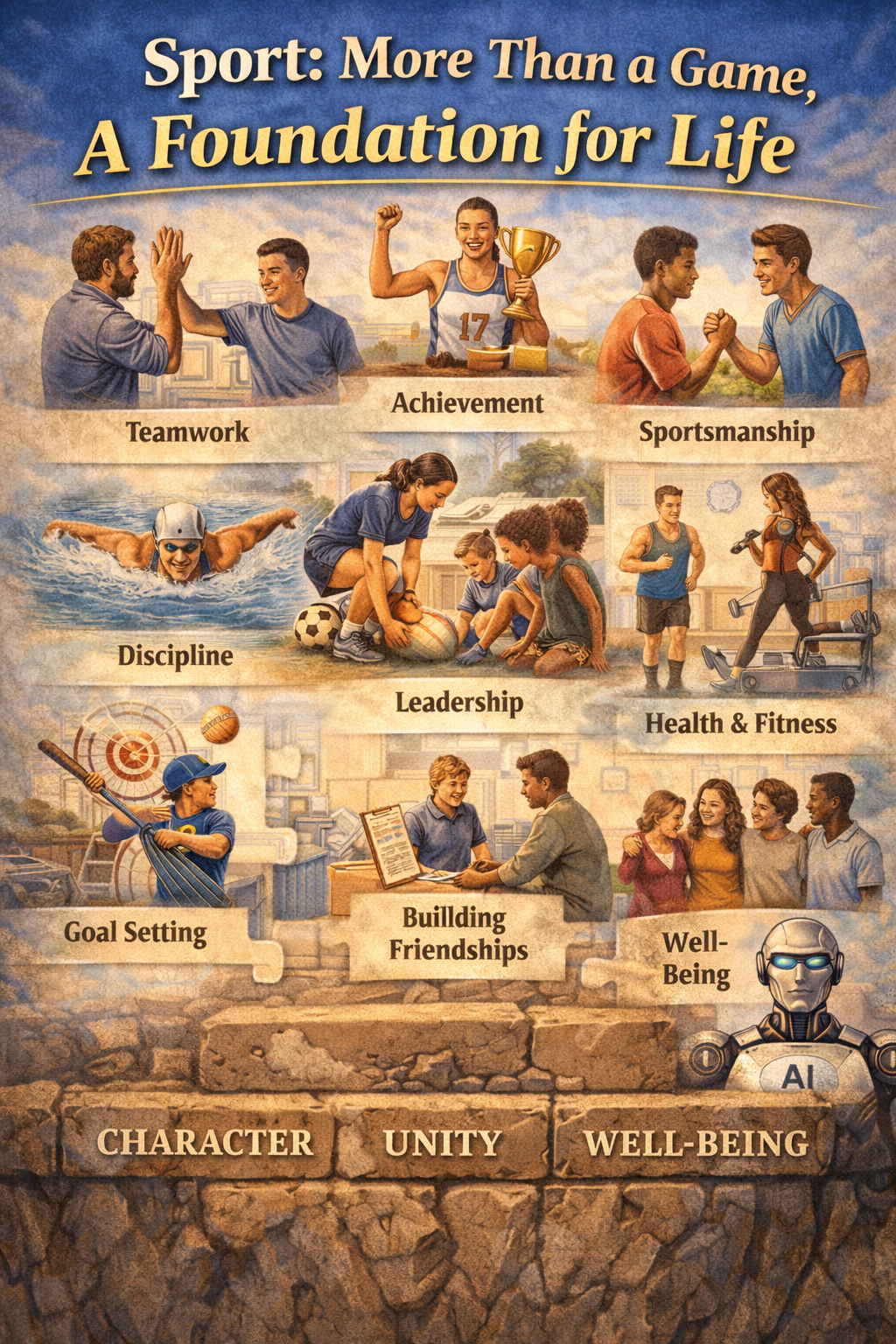
Sport is everywhere.
It fills stadiums, dominates headlines, sparks debates, and brings entire nations to a standstill during major tournaments. But beyond the spectacle, beyond the trophies and rivalries, sport plays a much bigger role in our lives.
It shapes character.
It builds discipline.
It strengthens communities.
It improves physical and mental health.
In many ways, sport is one of the most powerful social tools we have.
Let’s explore why sport matters far beyond the scoreboard.
Sport and Physical Health: The Obvious but Essential Benefit
The most visible benefit of sport is physical fitness.
Regular participation in sports improves:
- Heart health
- Lung capacity
- Muscle strength
- Coordination
- Flexibility
- Endurance
In a world where many jobs involve sitting for hours, sport provides structured movement. It forces the body to stay active.
Consistent activity reduces the risk of:
- Obesity
- High blood pressure
- Type 2 diabetes
- Cardiovascular disease
Even recreational sports once or twice a week can make a measurable difference.
The key isn’t intensity. It’s consistency.
The Mental Strength Sport Builds
Sport trains the mind as much as the body.
When you compete, you experience:
- Pressure
- Expectation
- Failure
- Success
- Fatigue
- Competition
Learning to manage these experiences builds resilience.
You miss a shot. You lose a match. You make a mistake in front of others. And you keep going.
That process strengthens mental toughness.
Physical activity also releases endorphins, natural chemicals that reduce stress and improve mood. Many people use sport as a way to clear their mind after a long day.
In that sense, sport becomes therapy in motion.
Discipline and Delayed Gratification
Improvement in sport doesn’t happen overnight.
You practice drills.
You repeat movements.
You train when you don’t feel like it.
Over time, small improvements compound.
This teaches one of the most valuable life lessons: results follow effort.
Children and teenagers who grow up playing sports often develop stronger time management skills. They learn to balance school, training, and personal life.
They understand that progress requires patience.
That mindset transfers directly into academic and professional environments.
Teamwork and Communication
Team sports teach collaboration in a way that classrooms often cannot.
On the field, you must:
- Communicate clearly
- Trust teammates
- Accept different roles
- Adjust strategies quickly
No single player wins alone.
Even the most talented athlete depends on others for support, coordination, and structure.
This mirrors real life.
In business, projects succeed through teamwork. In families, cooperation matters. In communities, collaboration builds strength.
Sport becomes a practical lesson in shared responsibility.
Sport as a Social Connector
Few things unite people like sport.
Think about major tournaments. Entire cities celebrate together. Strangers high-five in public. Conversations spark instantly over shared teams.
At a local level, sports clubs create belonging.
Children form friendships. Parents connect. Communities gather.
In a time when digital interaction often replaces face-to-face connection, sport brings people physically together.
It builds real-world relationships.
Youth Development and Confidence
For young people, sport can be transformative.
It provides:
- Structure
- Mentorship
- Constructive competition
- Positive role models
Winning builds confidence. Losing builds humility.
Both are essential.
Sport also gives children a sense of identity. Being part of a team or mastering a skill builds self-esteem.
And for many young people, sport offers a safe outlet for energy and emotion.
The Economic Impact of Sport
Sport isn’t just personal. It’s global.
Professional leagues generate billions of dollars annually.
Major sporting events drive:
- Tourism
- Broadcasting revenue
- Sponsorship deals
- Merchandising
- Infrastructure development
But beyond elite competitions, grassroots sports also support local economies.
Community clubs hire coaches, rent facilities, and create small business activity.
Sport is both cultural and economic.
Technology Is Changing Sport
Modern sport looks very different from decades ago.
Athletes now use:
- Performance tracking devices
- Advanced recovery equipment
- Nutrition science
- Video analysis
- Data-driven strategies
Coaches analyze statistics in real time. Fans follow matches through apps and live streams.
Even amateur athletes benefit from wearable technology that tracks heart rate, distance, and recovery.
The future of sport will likely include even more data integration and artificial intelligence.
But at its core, sport will remain human.
Effort, strategy, teamwork, and skill cannot be replaced by technology.
Individual vs. Team Sports
Both types offer unique benefits.
Individual sports like tennis, athletics, swimming, and boxing emphasize personal accountability. You win or lose based on your own performance.
Team sports emphasize collaboration and shared strategy.
Some personalities thrive in solo competition. Others excel in group environments.
There’s no right answer. What matters is engagement.
Challenges Facing Modern Sport
Despite its benefits, sport faces challenges:
- Rising participation costs
- Limited access in some communities
- Pressure and burnout among young athletes
- Overemphasis on winning
- Doping and fairness issues at elite levels
Addressing these issues is crucial to keeping sport inclusive and healthy.
The focus should remain on development and enjoyment, not just victory.
Why Sport Still Matters Today
Modern life is increasingly sedentary and digital.
Screens dominate attention. Physical movement often decreases with age.
Sport counters that trend.
It demands:
- Focus
- Movement
- Strategy
- Interaction
It grounds us in the physical world.
In a culture obsessed with instant gratification, sport teaches patience.
In a world filled with individualism, sport promotes teamwork.
In a time of stress and anxiety, sport offers release.
Final Thoughts
Sport is not just entertainment.
It is education.
It is therapy.
It is community.
It is discipline.
Whether you’re playing casually with friends, training seriously, coaching youth, or cheering from the stands, sport plays a meaningful role.
Its value goes far beyond wins and losses.
It builds stronger bodies.
Stronger minds.
Stronger communities.
And in a rapidly changing world, that foundation is more important than ever.

