
Business is often glamorized.
Fast growth.
Big revenue numbers.
Luxury lifestyles.
Overnight success stories.
But real business is rarely dramatic.
It’s strategic.
It’s disciplined.
It’s patient.
At its core, business is simple: solve a problem in a way that people are willing to pay for.
Everything else is detail.
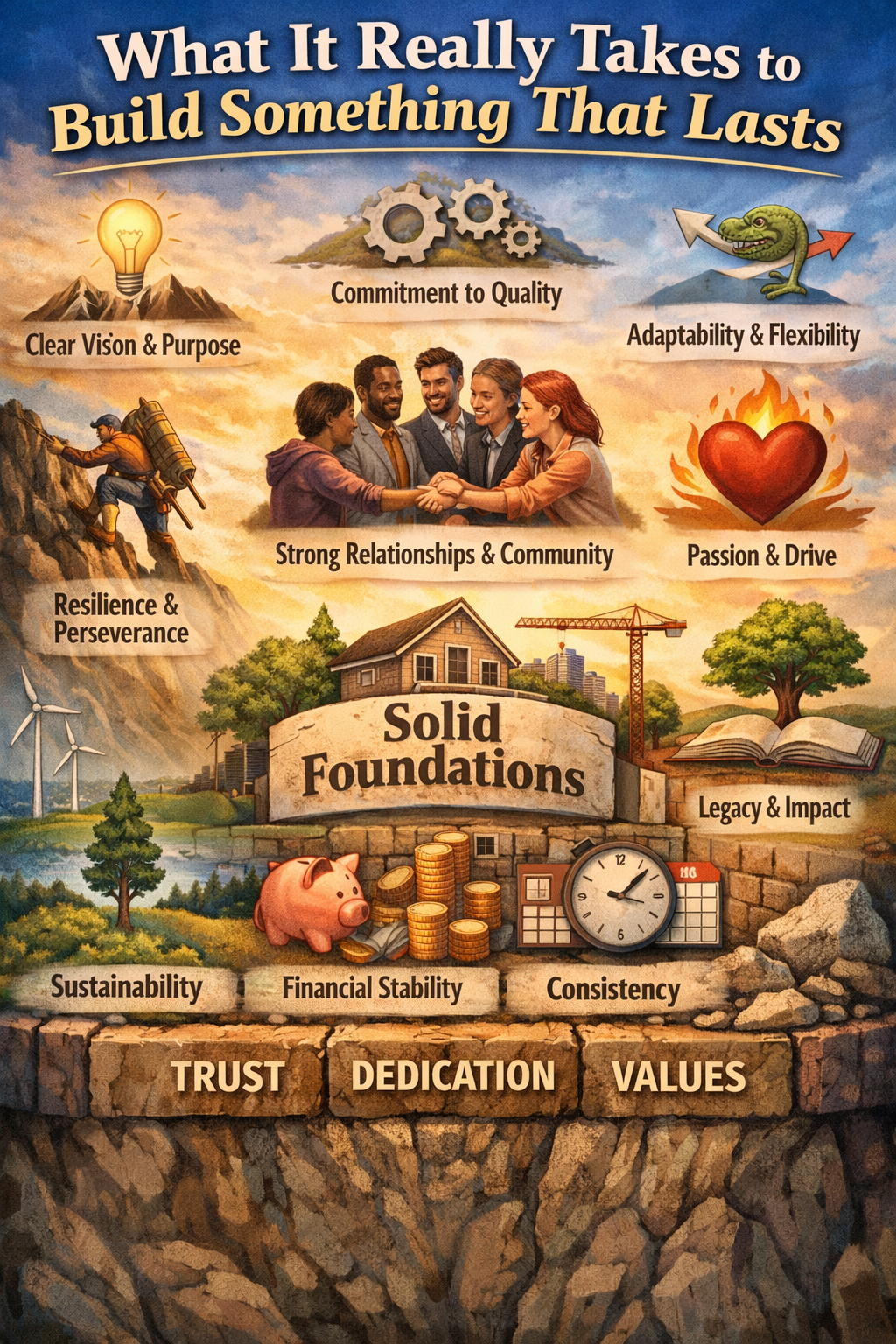
Let’s break down what business really involves and what it takes to build something sustainable.
What Is a Business?
A business exists to create value.
That value might be:
- A product that solves a need
- A service that saves time
- A solution to a specific problem
- An experience people enjoy
If no value is created, no business exists.
Revenue is not the starting point. Value is.
Money is the result of value delivered consistently.
The Three Foundations of Business
Every successful business rests on three pillars:
1. A Clear Problem
If the problem is vague, the business struggles.
Strong businesses solve specific issues.
For example:
Weak idea: “I want to sell clothes.”
Stronger idea: “I want to create affordable, high-quality gym wear for petite women.”
Specificity attracts the right customers.
2. A Defined Audience
You cannot sell to everyone.
Trying to target “everyone” leads to unclear messaging and weak branding.
Instead, identify:
- Who needs this most?
- What are their pain points?
- What are they currently using instead?
Clarity builds connection.
3. A Sustainable Model
A business must make more money than it spends.
This sounds obvious, but many startups ignore it.
Key questions include:
- What are your costs?
- What is your pricing strategy?
- How do you acquire customers?
- What is your profit margin?
Growth without profit is fragile.
Types of Business Models
There are many ways to structure a business.
Product-Based
You sell physical goods.
Examples:
- Clothing brands
- Electronics
- Handmade crafts
Requires supply chain management and inventory control.
Service-Based
You sell time or expertise.
Examples:
- Consulting
- Marketing services
- Coaching
- Repair services
Lower startup costs but limited by time capacity.
Digital Businesses
You sell online products or services.
Examples:
- E-commerce
- Online courses
- Software
- Subscription platforms
Scalable but competitive.
Hybrid Models
Many modern businesses combine elements.
For example:
A fitness coach may sell training programs, offer one-on-one sessions, and run a subscription app.
Flexibility increases resilience.
The Importance of Marketing
Even the best product fails without visibility.
Marketing is not manipulation. It’s communication.
You must clearly explain:
- What you offer
- Who it’s for
- Why it matters
- How it’s different
Strong marketing builds trust.
Weak marketing creates confusion.
Consistency matters more than complexity.
Financial Discipline in Business
Many businesses fail because of poor financial management.
Key areas to monitor:
- Cash flow
- Expenses
- Profit margins
- Taxes
- Reinvestment strategy
Revenue alone means nothing if costs are uncontrolled.
Sustainable businesses focus on steady growth rather than rapid expansion without structure.
Adaptability Is Survival
Markets change.
Technology evolves.
Customer preferences shift.
Competition increases.
Businesses that survive long term are adaptable.
They:
- Listen to customer feedback
- Monitor trends
- Adjust strategies
- Innovate carefully
Rigidity kills growth.
The Role of Leadership
Every business reflects its leadership.
Strong leaders:
- Make clear decisions
- Take responsibility
- Communicate effectively
- Build strong teams
- Stay calm under pressure
Leadership is not about authority. It’s about direction.
Even small businesses require strong internal discipline.
Common Business Mistakes
Many new entrepreneurs make similar errors:
1. Starting Without Research
Passion is important, but market validation is critical.
2. Underpricing
Trying to compete only on price often leads to burnout.
3. Ignoring Branding
Perception influences trust.
4. Avoiding Marketing
“If I build it, they will come” rarely works.
5. Scaling Too Fast
Growth without systems leads to chaos.
Awareness of these mistakes reduces risk.
The Reality of Entrepreneurship
Entrepreneurship often looks exciting from the outside.
But behind the scenes, it includes:
- Long hours
- Uncertainty
- Financial risk
- Continuous learning
- Problem-solving daily
It requires resilience.
But it also offers freedom.
The freedom to create.
The freedom to build.
The freedom to control direction.
For many, that trade-off is worth it.
Business in the Digital Era
Technology has lowered barriers to entry.
You can start a business with:
- A laptop
- Internet access
- A clear idea
- Basic marketing skills
But lower barriers mean higher competition.
Success now requires:
- Clear positioning
- Strong branding
- Customer focus
- Consistent execution
Attention is scarce. Value must be obvious.
Long-Term Business Success
Short-term wins are exciting.
Long-term stability is powerful.
Businesses that last focus on:
- Customer loyalty
- Operational efficiency
- Product improvement
- Reputation management
- Financial health
Trust builds slowly. Once earned, it compounds.
Final Thoughts
Business is not about hype.
It’s about solving real problems consistently.
It’s about discipline more than excitement.
It’s about clarity more than complexity.
Whether you’re launching a startup, running a small local shop, or building an online brand, the principles remain the same:
- Identify a problem.
- Offer real value.
- Communicate clearly.
- Manage finances carefully.
- Adapt when necessary.
Business success is rarely accidental.
It’s built step by step.

