
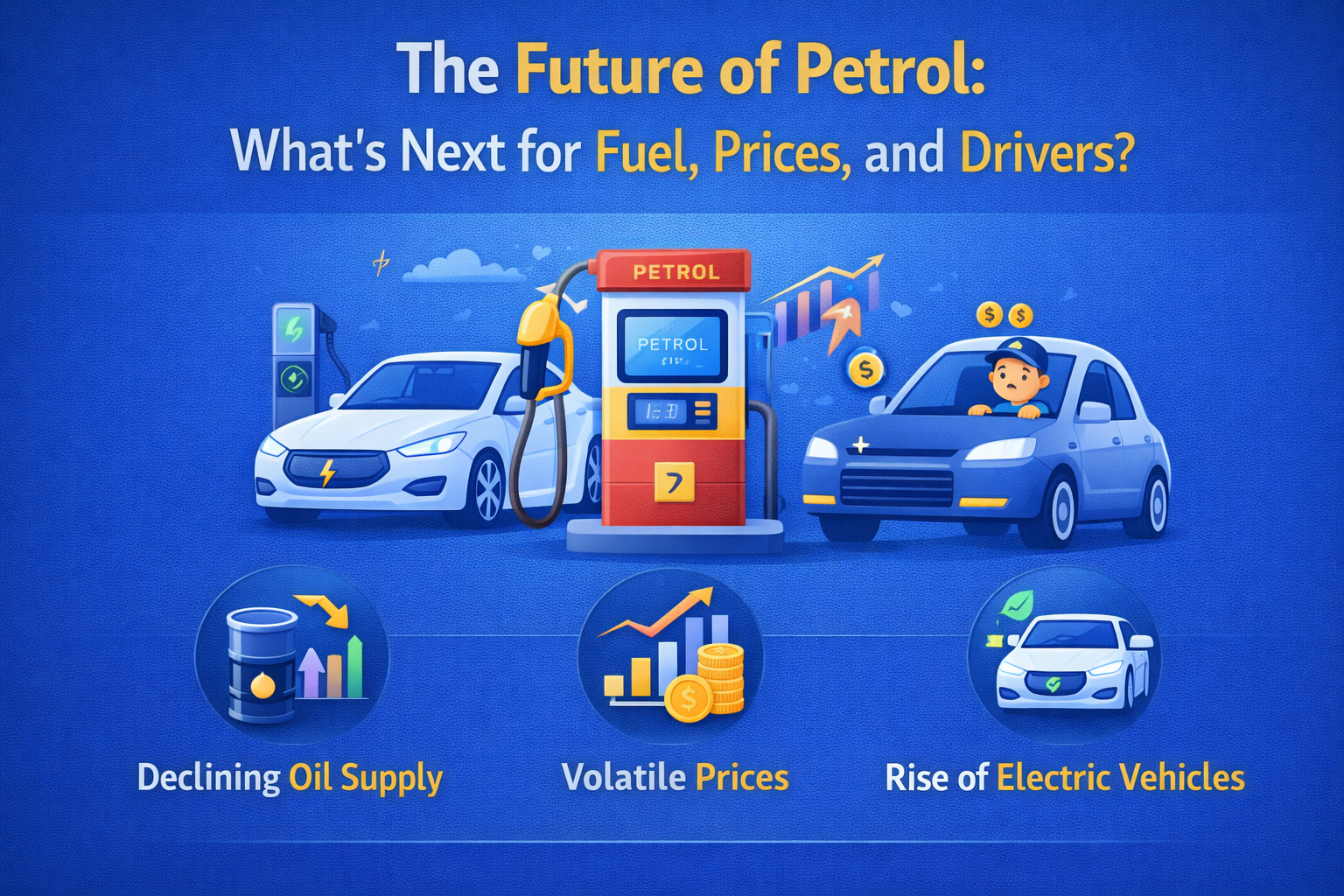
The Future of Petrol: What’s Next for Fuel, Prices, and Drivers?
Petrol has powered the world for more than a century. It fuels cars, bikes, trucks, generators, and entire economies. For decades, it was the default choice. Reliable. Available. Familiar.
But things are changing.
Electric vehicles are growing. Governments are tightening emission rules. Fuel prices rise and fall in unpredictable ways. People are asking a simple question:
What’s next for petrol?
In this article, we’ll look at where petrol stands today, what forces are shaping its future, and what drivers and businesses should realistically expect over the next decade.
Let’s start with the bigger picture.
Petrol Isn’t Disappearing Tomorrow
There’s a common belief that petrol is about to vanish. That’s not realistic.
Even with the rapid growth of electric vehicles, petrol-powered cars still dominate roads across most countries. In many developing regions, petrol infrastructure is far more established than electric charging networks.
Replacing millions of vehicles takes time. Replacing global infrastructure takes even longer.
So in the short term, petrol is not going anywhere.
What will change is how it’s used, regulated, and priced.
The Shift Toward Electric Vehicles
Electric vehicles, or EVs, are the biggest challenge petrol has ever faced.
Here’s why they’re growing:
- Lower long-term running costs
- Government incentives and tax benefits
- Environmental concerns
- Improvements in battery technology
Many governments have already announced plans to phase out new petrol and diesel car sales over the next 10 to 20 years. That does not mean petrol cars will instantly disappear. It means new production will gradually shift.
For drivers, this creates an interesting transition period.
Petrol vehicles will remain on the road for years, but the automotive industry is slowly investing more in electric and hybrid models.
This affects everything from fuel demand to petrol station business models.
What Happens to Petrol Prices?
Petrol prices have always been volatile. They depend on:
- Global oil supply
- Geopolitical tensions
- Refining costs
- Government taxes
- Currency exchange rates
In the future, price fluctuations may become even more sensitive.
Why?
Because as electric vehicles grow, overall petrol demand may slowly decline in some regions. When demand drops, oil-producing countries often adjust supply to protect prices. That can create tighter markets.
At the same time, environmental taxes may increase the cost of petrol in certain countries to discourage usage.
So while petrol may remain available, it may not remain cheap.
Drivers should expect continued price swings rather than stable long-term pricing.
The Rise of Hybrid Technology
One of the most realistic “next steps” for petrol is not full replacement, but partnership.
Hybrid vehicles combine petrol engines with electric motors. They use less fuel and produce fewer emissions without relying entirely on charging stations.
For many drivers, hybrids feel like a practical middle ground.
You still refuel at petrol stations.
You get better mileage.
You reduce fuel costs.
As battery technology improves, hybrids may become more efficient, reducing petrol consumption per vehicle even further.
This doesn’t eliminate petrol. It simply reduces how much of it each car uses.
Environmental Pressure Is Real
Climate change policies are not slowing down.
Governments around the world are setting stricter emission standards. Some cities are introducing low-emission zones. Others are charging extra fees for petrol vehicles entering certain areas.
Petrol faces two big environmental pressures:
- Carbon emissions
- Air pollution in urban areas
This pressure drives investment into alternatives like electric, hydrogen, and biofuels.
Petrol companies are responding by investing in renewable energy, carbon capture technologies, and cleaner refining processes.
The industry is adapting. But the public narrative around fossil fuels is changing.
That affects long-term demand.
What About Developing Countries?
While electric vehicles are gaining traction in wealthier countries, many developing regions still rely heavily on petrol.
Reasons include:
- Lower vehicle costs
- Limited charging infrastructure
- Unstable electricity supply
- Higher upfront cost of EVs
In these regions, petrol demand may continue growing for years.
This creates a global imbalance.
Some countries may see declining petrol use, while others experience growth. That uneven transition makes it difficult to predict a clear global decline timeline.
Will Petrol Stations Disappear?
Not likely. But they will evolve.
Many petrol stations are already transforming into convenience hubs. They offer:
- Food and coffee
- Parcel pickup services
- Car washing
- Charging stations for electric vehicles
In the future, we may see petrol stations that offer both fuel pumps and EV chargers side by side.
Instead of disappearing, they may diversify.
Fuel retailers understand the shift is happening. Many are preparing for it rather than resisting it.
Synthetic Fuels and Biofuels
Another possible future for petrol is not full replacement, but modification.
Synthetic fuels and biofuels aim to reduce carbon impact while still working in traditional combustion engines.
These fuels can:
- Lower emissions
- Use existing vehicle engines
- Work with current infrastructure
The challenge is cost. Many of these alternatives are still more expensive to produce than standard petrol.
But as technology improves and environmental regulations tighten, these options may become more competitive.
If that happens, petrol engines might survive longer by using cleaner fuels.
The Impact on Car Owners
If you currently drive a petrol car, what does all this mean for you?
In the short term, very little changes.
Petrol remains widely available. Mechanics are trained to service petrol engines. Spare parts are accessible. Resale markets still exist.
Over the long term, however, several things may happen:
- Stricter emission regulations
- Higher fuel taxes
- Reduced resale value of older petrol cars
- Increased insurance costs in certain regions
That does not mean you should panic and sell your car tomorrow.
It simply means that when it’s time to replace your vehicle, you may want to consider hybrid or electric options depending on your location and needs.
Is Petrol Becoming Obsolete?
Obsolete is a strong word.
Consider this: landline phones still exist. So do printed newspapers. Technologies rarely disappear overnight.
They decline gradually.
Petrol is more complex than a consumer gadget. It supports global logistics, aviation support systems, agriculture machinery, and industrial processes.
Even if passenger cars shift heavily toward electric power, petrol and other refined fuels will likely remain part of the global energy mix for decades.
The real change is not elimination. It is reduction and transformation.
Investment and Business Perspective
For investors and business owners, the future of petrol raises important questions.
Oil companies are diversifying. Many are investing in:
- Renewable energy
- Electric charging networks
- Hydrogen projects
- Carbon capture
This signals that even traditional fuel giants see a long-term shift coming.
Businesses that rely heavily on petrol, such as transport fleets, may start exploring alternative vehicles to reduce long-term operating costs.
Forward-thinking companies are already running pilot programs with electric delivery vans and hybrid fleets.
The transition may not be immediate, but preparation has already begun.
What Drivers Should Watch in the Next 10 Years
Here are key trends to monitor:
- Government legislation on petrol vehicle bans
- EV charging infrastructure growth
- Battery cost reductions
- Fuel taxation policies
- Development of alternative fuels
If battery costs continue dropping, electric vehicles become more affordable for the average buyer. That accelerates the shift.
If charging networks expand rapidly, convenience increases. That also reduces reliance on petrol.
But if electricity prices rise significantly or charging infrastructure lags, petrol may hold its position longer than expected.
The future depends on multiple moving parts.
A Balanced Outlook
It’s easy to take extreme positions.
Some say petrol is finished.
Others say electric vehicles are overhyped.
The truth usually sits in the middle.
Over the next decade, we will likely see:
- Gradual decline in petrol passenger vehicle sales in certain regions
- Continued strong demand in developing markets
- Growth of hybrid vehicles
- Expansion of alternative fuels
- Petrol stations adapting rather than disappearing
The world rarely changes in a straight line.
Transitions take time.
Final Thoughts: What’s Next for Petrol?
Petrol is entering a new phase.
It is no longer the uncontested king of transportation. But it is far from irrelevant.
The next chapter for petrol looks like this:
- Slower growth in some regions
- Stronger environmental regulation
- Increased competition from electric vehicles
- Integration with cleaner technologies
- Gradual evolution rather than sudden collapse
For drivers, the key is flexibility.
Stay informed. Watch policy changes. Consider long-term costs when buying your next vehicle.
For businesses, adaptation is essential. Diversify. Prepare for changing fuel demand. Invest in future-ready infrastructure.
Petrol built the modern transportation system. Its role is shifting, not vanishing.
And like most major transitions in history, the future will not arrive overnight. It will unfold step by step.
If you’d like, I can tailor the next article more specifically, such as:
- “Will Petrol Prices Rise in 2026?”
- “Petrol vs Electric Cars: Which Is Better in 2026?”
- “How Petrol Impacts the Global Economy”
- “Is It Still Worth Buying a Petrol Car?”
Just tell me the angle you want.

