
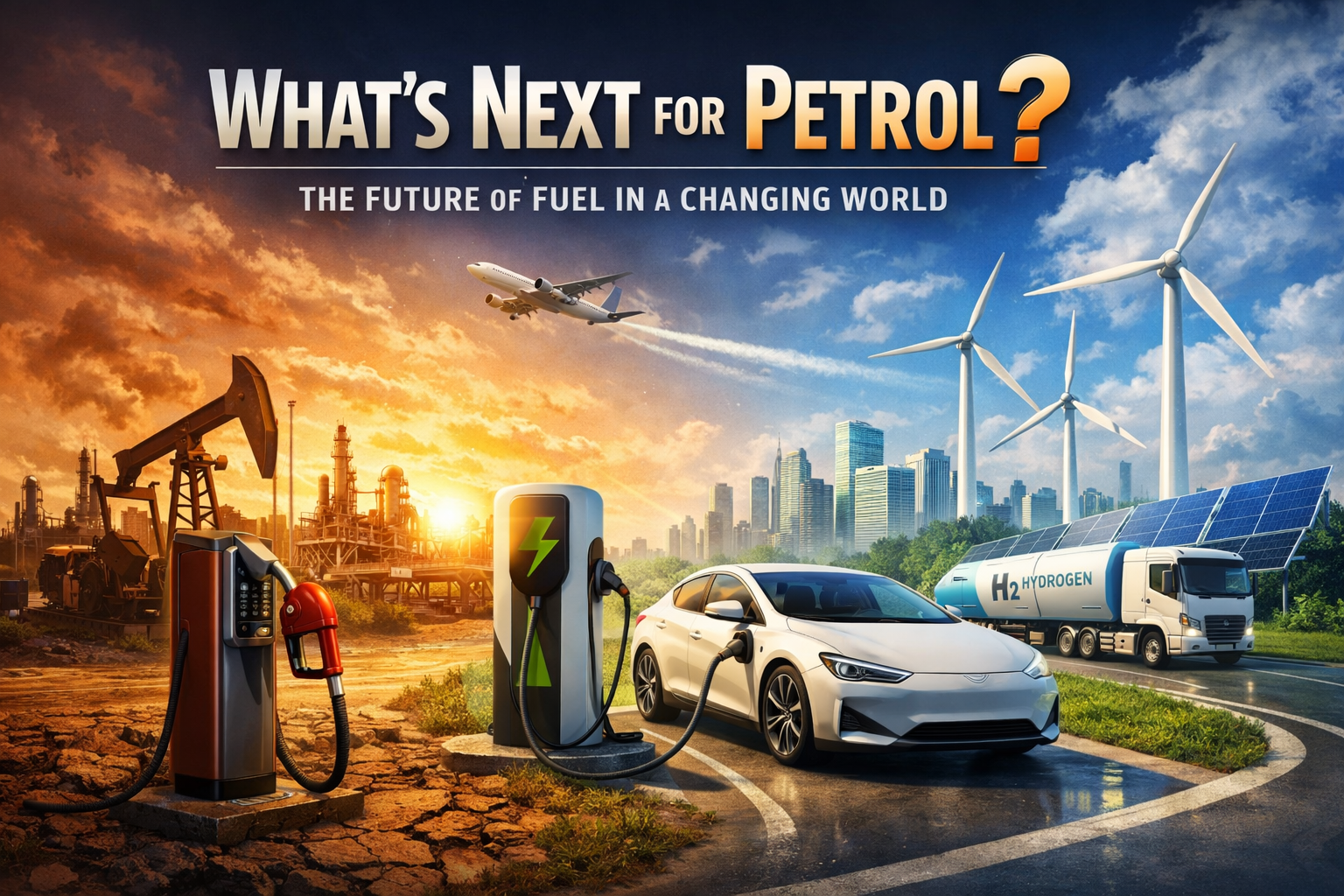
I’ll interpret this as: What is the next generation of petrol?
In other words, what comes after traditional petrol, and how fuel is evolving.
Here’s a full blog-style article you can use.
What’s Next for Petrol? The Future of Fuel in a Changing World
For over 100 years, petrol has powered the modern world. It built cities, connected countries, and made personal transportation accessible to millions.
But today, the conversation around fuel is changing.
Electric vehicles are rising. Climate policies are tightening. Oil prices remain unpredictable. Governments are setting deadlines to phase out new petrol car sales.
So what’s next for petrol?
Is it disappearing? Evolving? Being replaced?
The truth is more complex than most headlines suggest. Petrol isn’t simply ending. It’s entering a transition phase. And what comes next depends on technology, economics, and global demand.
Let’s break it down.
Petrol Isn’t Ending — It’s Adapting
Despite the growth of electric vehicles, petrol still fuels the majority of cars on the road globally. In many countries, petrol vehicles make up more than 80 percent of active cars.
That’s not something that disappears overnight.
Even if new petrol car sales stop in certain regions by 2035 or 2040, existing vehicles will remain in use for many years after that. Infrastructure for refining and distributing petrol is deeply embedded in global systems.
The real question isn’t whether petrol vanishes.
It’s how it evolves.
The Push Toward Electric Vehicles
Electric vehicles (EVs) are the biggest driver of change.
Governments are encouraging EV adoption through:
- Tax incentives
- Emission regulations
- Investment in charging infrastructure
- Bans on new petrol car sales in future years
Battery technology is improving. Charging networks are expanding. Costs are gradually decreasing.
This puts long-term pressure on petrol demand, especially in developed markets.
But global transitions rarely move evenly.
While some countries rapidly adopt electric cars, others lack charging infrastructure, stable electricity supply, or affordability. In those regions, petrol demand may remain strong for decades.
So instead of a sudden drop, we’re likely to see a gradual, uneven shift.
Hybrid Vehicles: The Bridge Between Old and New
One of the most important “next steps” for petrol isn’t elimination. It’s integration.
Hybrid vehicles combine petrol engines with electric motors. They use less fuel while keeping traditional refueling convenience.
For many drivers, hybrids feel practical:
- No range anxiety
- Lower fuel consumption
- Reduced emissions
- No full reliance on charging stations
Hybrids may extend the life of petrol by reducing how much is used per vehicle instead of eliminating it entirely.
In many markets, hybrid growth is outpacing fully electric growth because it offers flexibility.
Petrol’s next phase may not be dominance. It may be partnership.
Synthetic Fuels: A Cleaner Version of Petrol?
One of the most interesting developments is synthetic fuel, sometimes called e-fuel.
Synthetic fuels are created using captured carbon dioxide and hydrogen. When burned, they release carbon that was already captured, potentially making them close to carbon-neutral.
The advantage:
- They can work in existing petrol engines
- No need to replace current vehicles
- No need to rebuild fuel infrastructure
The challenge:
- High production costs
- Large energy requirements
- Limited current supply
If production costs drop, synthetic fuels could allow petrol engines to survive in a cleaner form.
This could be especially important for industries like aviation, shipping, and performance vehicles where full electrification is harder.
Biofuels and Blended Petrol
Another path forward is biofuel blending.
Many countries already mix ethanol or other biofuels into standard petrol. This reduces net carbon emissions and decreases dependence on crude oil.
In the future, we may see:
- Higher biofuel blends
- Advanced plant-based fuels
- Waste-derived fuel technologies
These fuels won’t eliminate petrol entirely, but they can reduce its environmental impact.
Instead of pure fossil-based petrol, the next generation may be partially renewable.
What Happens to Petrol Prices?
The future of petrol pricing is difficult to predict because it depends on global supply and demand.
Several factors will shape pricing:
- Declining demand in some countries
- Continued demand in developing regions
- Oil production decisions by major producers
- Environmental taxes
- Currency fluctuations
As demand shifts, oil-producing countries may reduce supply to maintain price stability.
At the same time, governments may increase fuel taxes to discourage usage and fund green energy transitions.
This means petrol may remain available but potentially more expensive over time in certain regions.
Volatility is likely to continue.
Will Petrol Stations Disappear?
Probably not. But they will change.
Many petrol stations are already becoming multi-service centers offering:
- Coffee shops
- Convenience stores
- Parcel pickup
- Car washing
- Electric charging stations
In the future, stations may serve both petrol cars and electric vehicles side by side.
Fuel retailers are investing in EV charging networks because they understand the shift is happening. Rather than resisting change, many are adapting early.
Petrol stations may become energy stations.
The Role of Developing Countries
While developed countries debate petrol bans and EV targets, many developing regions face different realities.
Challenges include:
- High EV purchase costs
- Limited charging infrastructure
- Unstable electricity grids
- Lower average income levels
In these markets, petrol demand may continue growing as vehicle ownership increases.
This global imbalance means petrol’s decline won’t be uniform.
Some countries may phase it down quickly. Others may rely on it heavily for decades.
That’s why predictions of a complete global collapse of petrol demand are often exaggerated.
Environmental Regulations Will Shape the Timeline
Climate policy is one of the strongest forces shaping petrol’s future.
We’re already seeing:
- Low-emission zones in major cities
- Higher taxes on petrol vehicles
- Stricter emission standards
- Incentives for electric vehicles
Over time, regulations may make petrol vehicles less attractive financially, even if they remain technically usable.
For example:
- Higher annual registration fees
- Increased fuel taxes
- Restrictions in urban centers
This doesn’t eliminate petrol instantly. It gradually reduces its competitiveness.
What This Means for Car Owners
If you currently drive a petrol car, here’s the realistic outlook:
Short term:
- Petrol remains widely available
- Repairs and servicing remain accessible
- Resale markets still function
Medium to long term:
- Resale values may decline faster
- Fuel costs may rise
- Insurance and regulatory fees may increase
That doesn’t mean panic selling is necessary.
But when replacing a vehicle in the next 5–10 years, buyers may increasingly consider hybrid or electric options depending on local policies and infrastructure.
Is Petrol Becoming Obsolete?
Obsolete technologies usually disappear when something clearly better replaces them.
But petrol is deeply integrated into:
- Transportation
- Logistics
- Agriculture
- Emergency services
- Backup power systems
Even if passenger vehicles shift heavily to electric, petrol and refined fuels will likely remain critical for certain sectors for many years.
What’s changing is dominance.
Petrol may move from being the default option to one of several energy choices.
The Most Likely Future Scenario
Based on current trends, here’s a realistic projection for the next 20 years:
- Gradual decline in petrol car sales in developed markets
- Continued petrol use in developing regions
- Strong growth in hybrid vehicles
- Expansion of synthetic and blended fuels
- Petrol stations diversifying into energy hubs
This is not a dramatic collapse. It’s a transition.
Energy transitions historically take decades, not years.
Coal didn’t disappear when oil rose. Oil didn’t disappear when nuclear energy developed. Technologies overlap and coexist for long periods.
Petrol will likely follow that pattern.
The Bigger Energy Picture
The future isn’t just about petrol versus electric.
It’s about diversification.
We’re moving toward an energy mix that includes:
- Electric vehicles
- Hydrogen
- Biofuels
- Synthetic fuels
- Improved battery storage
- Renewable electricity
Petrol becomes part of a broader system rather than the center of it.
That’s a fundamental shift.
Final Thoughts: What’s Next for Petrol?
Petrol’s next chapter is not extinction. It’s transformation.
We are likely to see:
- Cleaner fuel blends
- Reduced overall consumption per vehicle
- Increased regulatory pressure
- More competition from electric alternatives
- A gradual shift rather than a sudden end
For consumers, flexibility is key.
For businesses, adaptation is essential.
For policymakers, balance will determine the pace of change.
Petrol built the transportation era of the 20th century.
The 21st century will still use petrol. Just not in the same way, and not with the same dominance.
The future of petrol isn’t about disappearance.
It’s about evolution.

