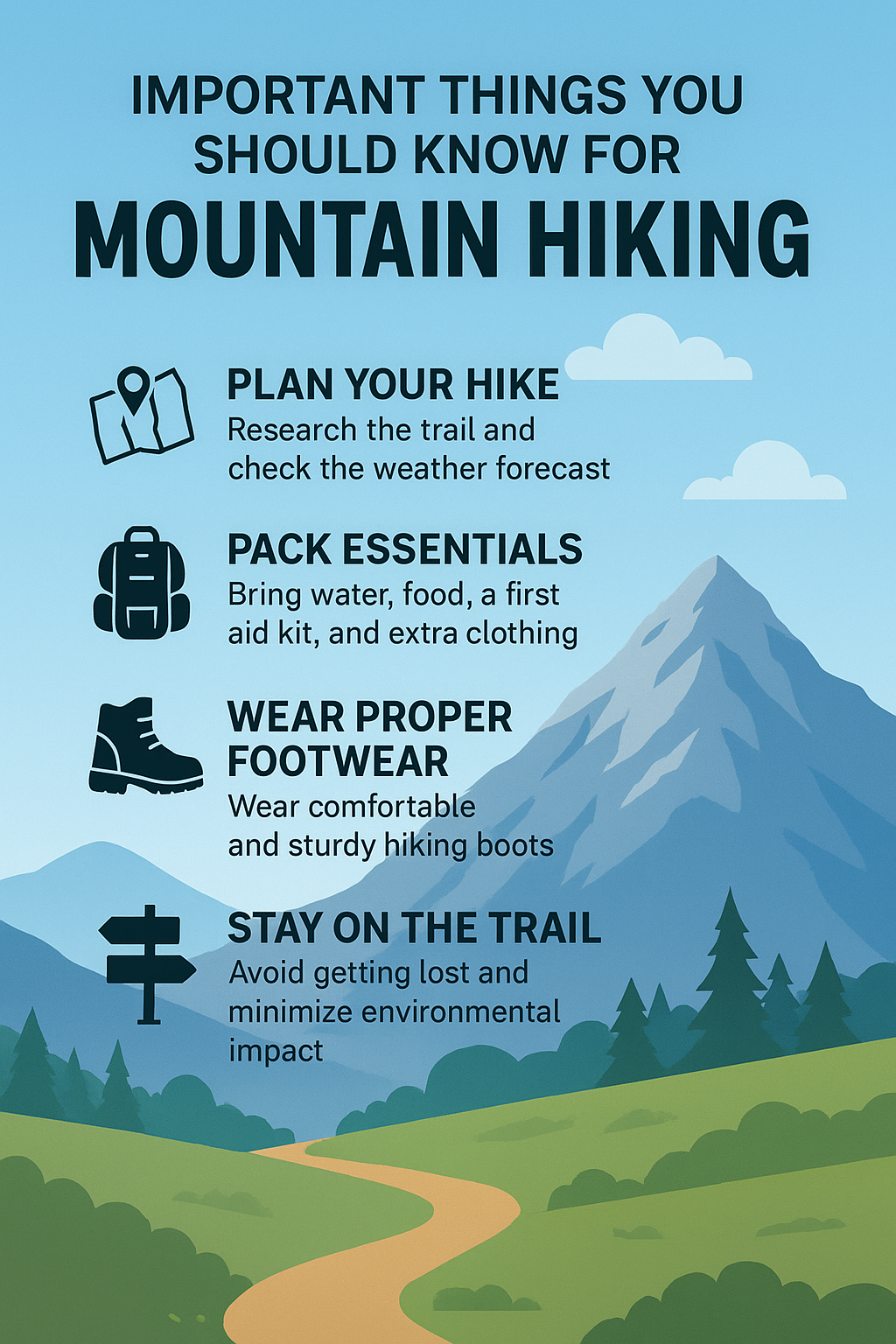
Mountain hiking is one of the most rewarding outdoor activities, offering fresh air, breathtaking scenery, and a strong sense of achievement. However, mountains can also be unpredictable and demanding. To ensure a safe and enjoyable experience, hikers must prepare properly and understand the unique challenges of the terrain. Here are the most important things you should know before heading into the mountains.
1. Prepare Your Body and Mind
Mountain trails often involve steep climbs, long distances, and changing weather conditions. Good physical condition improves safety and enjoyment. Practice regular walking, stair climbs, and cardio workouts. Just as important is mental preparation—knowing your limits, staying calm under stress, and being ready to turn back if conditions become unsafe.
2. Choose the Right Clothing and Gear
Proper gear can mean the difference between a pleasant hike and a dangerous one.
Clothing
-
Wear moisture-wicking base layers instead of cotton.
-
Carry insulating layers such as fleece or down.
-
Bring a waterproof jacket to protect against rain and wind.
-
Use sturdy, comfortable hiking boots that are already broken in.
Backpack Essentials
-
Map, compass, or offline GPS.
-
Headlamp with extra batteries.
-
First aid kit.
-
Water and snacks.
-
Emergency blanket.
-
Multi-tool or knife.
-
Sunscreen, sunglasses, and hat.
Good gear keeps you warm, dry, hydrated, and safe.
3. Understand Mountain Weather
Weather in the mountains can change quickly—from sunshine to fog, storms, or strong winds in minutes. Always check the weather forecast before you go, and watch the sky during your hike. Start early in the morning, as storms are more common in the afternoon. If clouds darken or winds rise, be prepared to stop or turn back.
4. Learn Basic Navigation Skills
Losing your way is one of the most common hiking risks. Learn how to read maps, understand trail markers, and use a compass. Do not depend solely on your phone—batteries drain fast in cold environments, and mountain areas often lack signal. Knowing your route beforehand is essential.
5. Stay Hydrated and Well-Fed
Bring enough water for the entire hike—typically 1.5 to 3 liters depending on distance and temperature. Dehydration affects your strength and judgment. Pack light but energy-rich snacks like nuts, dried fruit, or energy bars. Eat small amounts regularly to maintain your energy levels.
6. Prioritize Safety
Mountain safety requires preparation, awareness, and responsible behavior.
-
Tell someone your hiking plan and expected return time.
-
Stick to marked trails.
-
Avoid risky shortcuts or unstable ground.
-
Know basic first aid, especially for blisters, cuts, or sprains.
-
If you feel unwell, tired, or unsure about the trail, stop and reassess.
Remember: reaching the summit is optional—returning safely is mandatory.
7. Respect Wildlife and Nature
Mountain environments are delicate. Do not feed animals, avoid loud noises, and keep a respectful distance. Carry out all your trash and leave the environment as you found it. Following the “Leave No Trace” principles helps protect nature for future hikers.
8. Be Aware of Altitude Effects
At high elevations, the air becomes thinner, making breathing more difficult. Symptoms of altitude sickness include headache, dizziness, nausea, and fatigue. Ascend slowly and take breaks. If symptoms worsen, descend immediately. Hydration and proper pacing are key to managing altitude.
⭐ Conclusion
Mountain hiking is an exciting adventure, but it demands responsibility. With the right preparation, gear, and knowledge, you can enjoy the mountains safely and confidently. Whether you’re climbing a famous peak or exploring local trails, understanding these essential principles will help you make the most of your journey.